Beyond the Lab: Reflections on Curtin DeepStart 2026
Image: Resources Technology and Critical Minerals Trailblazer.
Curtin DeepStart 2026 has come to an end. From the first session on 30 July to Demo Night on 20 October, the program brought together workshops, mentoring sessions, conversations with investors and industry representatives, and an immersion visit to New South Wales.
Looking back, the most useful part of the program was not necessarily learning something entirely new. It was the opportunity to question some long-held assumptions, examine our business from different perspectives, and think more carefully about what we want to build.
An unusual starting point
I joined DeepStart with a somewhat different background from that of a typical early-stage founder.
As an academic and chemical engineer, much of my professional career has involved developing technologies, understanding industrial processes, and finding ways to improve their performance. Over the years, this work has led to several industry collaborations and, more importantly, opportunities to take research beyond the laboratory.
One example is VORTA, a hydrodynamic cavitation technology that our team at Vivira has developed and commercialised over many years.
VORTA has been deployed in industrial settings and has paying customers. This experience has taught us a great deal about what it takes to move a technology from research into practical use.
We have experienced first-hand the difficulties of translating laboratory performance to industrial applications, working with customers, designing and manufacturing equipment, and supporting installations in the field. In some ways, we had already completed much of what an early-stage technology venture sets out to achieve. Yet, an important question remained: how do we move from a successful technology and equipment business to a much larger, scalable industrial technology company?
That question became the central theme of my DeepStart experience.
Technology is necessary, but is it sufficient?
As engineers and researchers, we are trained to examine technical performance. Does the technology work? How much improvement does it provide? Is the result repeatable? Can we explain the underlying mechanisms? Can the process be improved further? These questions are essential, especially when developing technologies intended for industrial use. Whether that technical success can translate into a successful business is a separate question.
Throughout DeepStart, we were encouraged to look at the same technology through a different lens. What problem are we solving for the customer? How much is solving that problem worth? What alternatives does the customer have? Who makes the purchasing decision? What would convince a customer to adopt something new?
And perhaps most importantly, are we capturing an appropriate share of the value our technology creates? For example, if a relatively inexpensive piece of equipment can improve the performance of a process worth millions of dollars, should we be thinking primarily about the price of that equipment? This distinction between selling equipment and delivering measurable process value has become particularly relevant to our thinking.
From VORTA to Vivarta
Our experience with VORTA has provided a foundation in hydrodynamic cavitation, fluid mechanics, process engineering, equipment design, and industrial deployment. This experience also gives us a basis for exploring applications of hydrodynamic cavitation beyond the markets we currently serve.
Many industrial processes are limited by mass transfer, reaction rates, mixing, or the behaviour of multiphase systems. These limitations are common in mineral processing, hydrometallurgy, crystallisation, chemical manufacturing, and other process industries.
Hydrodynamic cavitation offers one possible route to addressing some of these limitations. Vivarta is an attempt to build on this technical and commercial experience and apply it to larger industrial challenges. Rather than treating cavitation as a standalone device, we are examining how it can be integrated into industrial processes to improve performance and economics.
This represents a shift in how we frame our work. The focus is increasingly on the industrial problem, the measurable value of solving it, and the evidence required to support adoption.
Of course, moving into new industrial applications brings a different set of challenges. Existing experience provides credibility, but does not automatically establish performance or commercial viability in a new application. We still need to identify the right problems, establish convincing technical evidence, demonstrate economic benefits, and work with customers willing to evaluate the technology at a meaningful scale. DeepStart helped us think more clearly about how to approach these decisions.
The value of stepping outside our usual circles
One of the most useful aspects of DeepStart was the opportunity to interact with people outside our normal academic and engineering networks. The program brought together founders working on very different technologies, along with mentors, investors, entrepreneurs, and industry representatives.
Although our technologies and markets differed, many of the underlying questions were remarkably similar. How do we find the right first customers? How do we establish credibility? What evidence is sufficient for an investor? How do we finance the next stage of development? When should we bring in commercial partners?
The NSW immersion was particularly valuable in this respect.
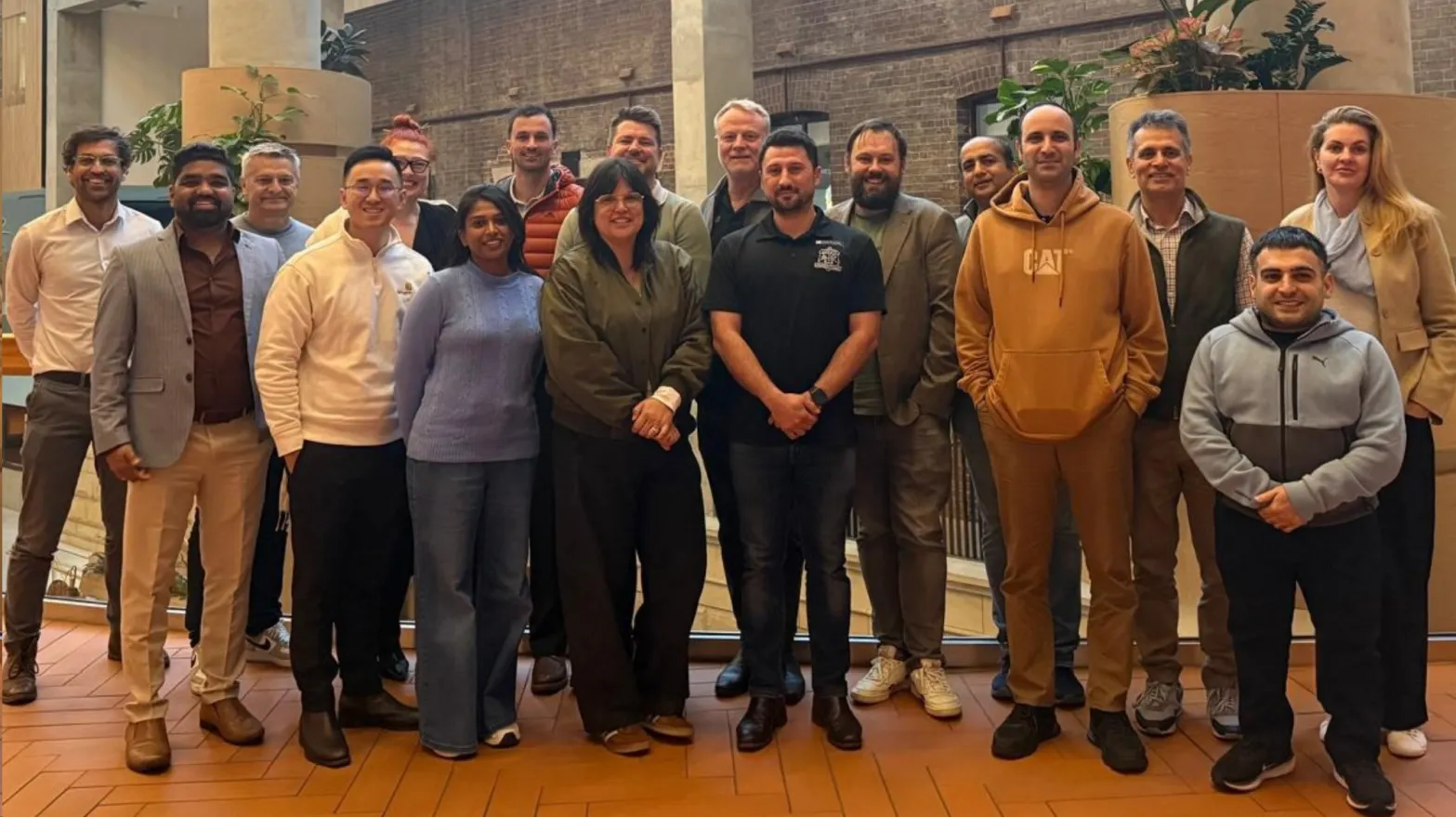
It provided opportunities to meet people working across different parts of the innovation and investment community, compare approaches, and test our assumptions in conversations that would otherwise have been difficult to arrange. For someone who has spent much of their career in academic research and industrial technology development, these discussions offered a useful perspective on the broader requirements of building a company.
The experience also reinforced something that is easy to underestimate: access to the right people can be as important as access to funding. A well-chosen introduction to a potential customer, industry partner, or experienced founder can help answer questions that months of internal discussion may not resolve.
Learning from other founders
Another aspect I appreciated was the opportunity to spend time with the other DeepStart participants. There is something useful about discussing your work with people who are developing completely different technologies. They do not necessarily share your assumptions, technical vocabulary, or understanding of the industry. Explaining your business to them forces you to be clearer about what actually matters.
At the same time, hearing about their experiences provides a reminder that many of the challenges involved in commercialisation are not unique to any particular technology. I particularly valued the informal conversations, the questions raised during sessions, and the opportunity to see how others approached their own commercial challenges. These interactions were an important part of the program, even when they were not part of the formal agenda.
A different perspective on academic research
The program also made me reflect on the relationship between academic research and commercialisation. Universities provide an environment in which we can investigate difficult problems, develop new ideas, and build technical knowledge over long periods. But the path from a research result to widespread industrial adoption is rarely straightforward.
A technology can be scientifically sound and technically effective, yet still struggle to find customers. Industrial adoption depends on many considerations beyond technical performance, including economics, operational risk, reliability, integration with existing equipment, and confidence in the people supporting the technology. Our experience with VORTA has made these considerations very real.
DeepStart reinforced my view that commercial thinking should not necessarily begin only after the research is complete. Understanding customer problems, industrial constraints, and the value of potential improvements can help shape the research questions themselves. For those of us working in applied engineering, this relationship between research and industrial need deserves greater attention.
What comes next?
We finish DeepStart with more clarity about the questions we need to answer, rather than a belief that we have already answered them all. For Vivarta, our immediate priorities are to identify industrial applications where the technology can create substantial value, develop strong technical and economic cases, and establish partnerships for pilot-scale demonstrations.
We also need to think carefully about the business model. Building a company around a specialised piece of equipment is different from building one around process performance, engineering know-how, and repeatable industrial solutions. The latter offers interesting possibilities, but requires us to be much more deliberate about how we develop, validate, deliver, and support the technology.
Final reflections
I joined DeepStart with considerable experience in research, engineering, and bringing technology into industrial use. I leave with a better appreciation of the questions involved in building a scalable technology business, a broader network, and a clearer sense of where we should focus our efforts.
Perhaps the most useful outcome was the opportunity to look at familiar work from a different perspective. After spending years asking how to make a technology work better, I am increasingly asking how to make it matter more to the industries that use it.
My thanks to the Curtin DeepStart team, mentors, speakers, industry participants, and fellow founders for the discussions, challenges, and connections throughout the program. I look forward to continuing many of those conversations. And, of course, to seeing where we can take Vivarta next.